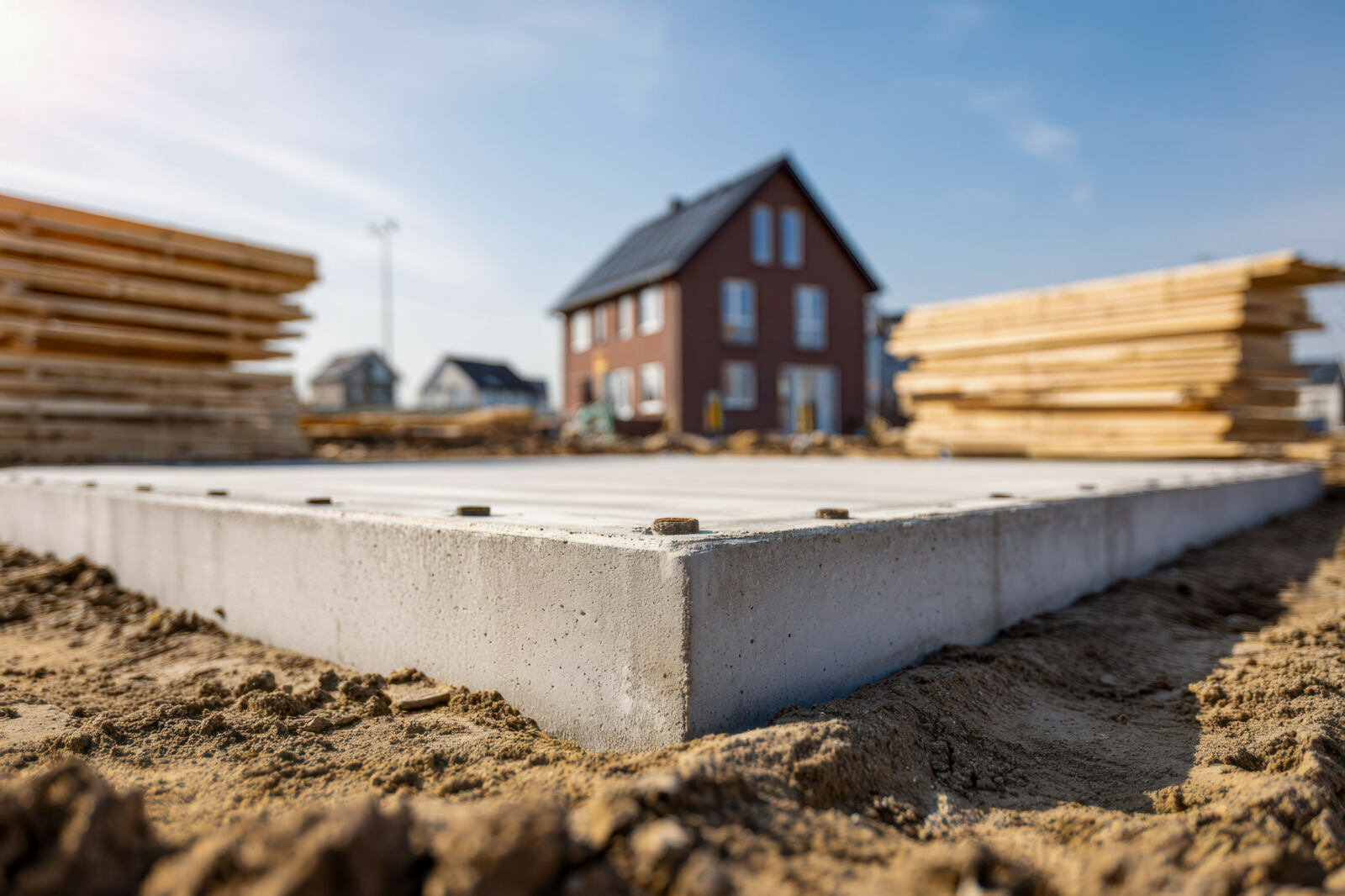

If you've been house hunting this summer, you've probably felt a little more room to breathe than buyers had a year or two ago. Sellers are cutting prices. Listings are piling up. Nobody's outbidding you by fifty thousand dollars over the first weekend. That part is real, and it's backed by the numbers. But there's a second number sitting quietly underneath all of that good news, and it's worth understanding before you assume this moment lasts indefinitely: builders broke ground on new homes in July at a seasonally adjusted annual rate of 1,239,000, down 13.5% from a year earlier, according to the Census Bureau. That's not a one-month wobble. It's the kind of pullback that tends to show up again later, as tighter supply.
Start with what's actually working in your favor right now. The National Association of Realtors reported that existing-home sales in July ran at a seasonally adjusted annual rate of 4.06 million, essentially flat from a year ago, up just 0.7%. Inventory sat at a 4.6-month supply, and first-time buyers made up 29% of transactions, down from 33% in June, a sign that some of the people who'd normally be competing hardest for entry-level homes are sitting this one out. Redfin's most recent weekly data, covering the four weeks ending August 9, showed new listings jumping 1.7% in a single week, the biggest one-week increase in five months, while pending sales sat near their lowest point since March. More homes for sale, fewer people racing to buy them. That's roughly the definition of a buyer's market, or at least the closest thing to one in a few years.
Mortgage rates are doing their part too, though not exactly in buyers' favor. Freddie Mac's weekly survey put the 30-year fixed rate at 6.65% as of August 20, the second straight weekly decline, though it's still a touch higher than the 6.58% average from a year ago. It's a small relief, not a rescue. Rates sitting in the high-6% range are still keeping a lot of would-be buyers on the sidelines, which is part of why sellers are having to work harder to get a deal done.
So does that mean this is simply a good moment to be a buyer and nothing more? Not quite.
While existing homes are piling up on the market, the pipeline of new ones is actually shrinking. Single-family starts fell 9.9% month-over-month in July to 808,000, and total completions (homes actually finished and ready to move into) dropped 16.8% from a year earlier, according to the same Census report. So why would builders sit on paperwork they already have in hand? Permits were up 5.0% from June and 3.1% from a year ago, meaning they have plenty of approval to build. They're just choosing not to break ground on it yet. The NAHB/Wells Fargo Housing Market Index, a monthly read on builder confidence, ticked up to 35 in August, but that's still the 16th straight month the index has sat below the 40-point mark that separates a confident market from a cautious one. Thirty-five percent of builders reported cutting prices in August, by an average of 6%, just to keep the homes they've already built moving.
HouseJet believes this is the part of the story that gets lost in the buyer's-market headlines: builders aren't backing off because demand genuinely disappeared. They're backing off because the current mix of high rates, expensive materials, and cautious buyers makes it hard to pencil out a new project and feel confident it sells for a profit eighteen months from now. That's not a builder problem so much as a timing problem, and it's one that tends to catch up with buyers later, once fewer new homes finish construction and the breathing room in today's market starts to close back up.
Here's the catch, though, and it's an important one. None of this means you should rush into a purchase out of fear that leverage disappears next month. Construction pipelines move slowly. A home that breaks ground today typically doesn't complete for close to a year in most markets, which means the effects of July's pullback won't really show up in available inventory until sometime in 2027. You have time. What you don't have is an indefinite window.
What This Actually Means for You Right Now
The most useful thing you can do is separate today's negotiating room from tomorrow's supply. Prices being flexible on an existing listing right now doesn't tell you much about what a comparable new-construction home will cost once fewer of them are finishing each month. If new construction is part of your search, it's worth asking a builder or agent directly how their pipeline looks, not just what's already finished and sitting on the lot.
Take the price cuts seriously, but don't assume they'll still be on the table in six months. With more than a third of builders discounting and existing sellers doing the same in softer-demand markets, there's genuinely room to negotiate right now on price, closing costs, or repairs. That kind of flexibility tends to shrink first, well before rates or headlines catch up with it.
And the step people skip most often: get a real read on your own numbers before you get a read on the market's. A mortgage professional can walk you through what a payment actually looks like at today's rates versus what it might look like if rates ease further, without pretending anyone can predict which one happens first. That conversation doesn't commit you to anything except having better information than a headline gives you.
If you're a buyer, the takeaway is straightforward: the room you have to negotiate right now is real, but it's not guaranteed to last as new supply thins out over the next year or two. If you're selling an existing home, that same shrinking construction pipeline is one more reason a well-priced listing today competes with less future inventory than the headlines suggest. And if you're building new or buying pre-construction, ask hard questions about timeline and pricing before you sign. A builder cutting prices by 6% didn't do that by accident.
It's the kind of gap between this week's headlines and next year's supply that's worth keeping an eye on, which is exactly why HouseJet tracks reports like these month over month rather than reacting to any single one.
None of this is a reason to panic, and it's not a reason to wait, either. It's a reason to understand what's actually sitting underneath the numbers you're seeing this week. The market feels a little easier right now. It won't necessarily stay that way.