
Real estate and world events have always had a complicated relationship. When conflict breaks out somewhere on the globe, the ripple effects don't stay neatly contained to battlefields and headlines — they wash up on the shores of mortgage rates, housing demand, construction costs, and neighborhood migration patterns right here in the United States. It's a story as old as the country itself, and while parts of it are sobering, there's also a lot of resilience, creativity, and unexpected opportunity woven through it.
Let's take a walk through history and look at how international conflicts — from World War II all the way through more recent global tensions — have pushed and pulled the American housing market in ways nobody always anticipated.
World War II: The Unlikely Spark That Built the Suburbs
If you want the single biggest example of international conflict reshaping American real estate, World War II is your answer. Yes, the war brought tremendous hardship, rationing, and devastating loss. It didn't just spur on a baby boom, it also set in motion one of the greatest housing booms this country has ever seen.
During the war years, residential construction nearly ground to a halt. Materials were diverted to military use, workers were deployed overseas, and housing demand piled up like a coiled spring. Then, when the war ended in 1945 and servicemen came home by the millions, that spring released all at once.
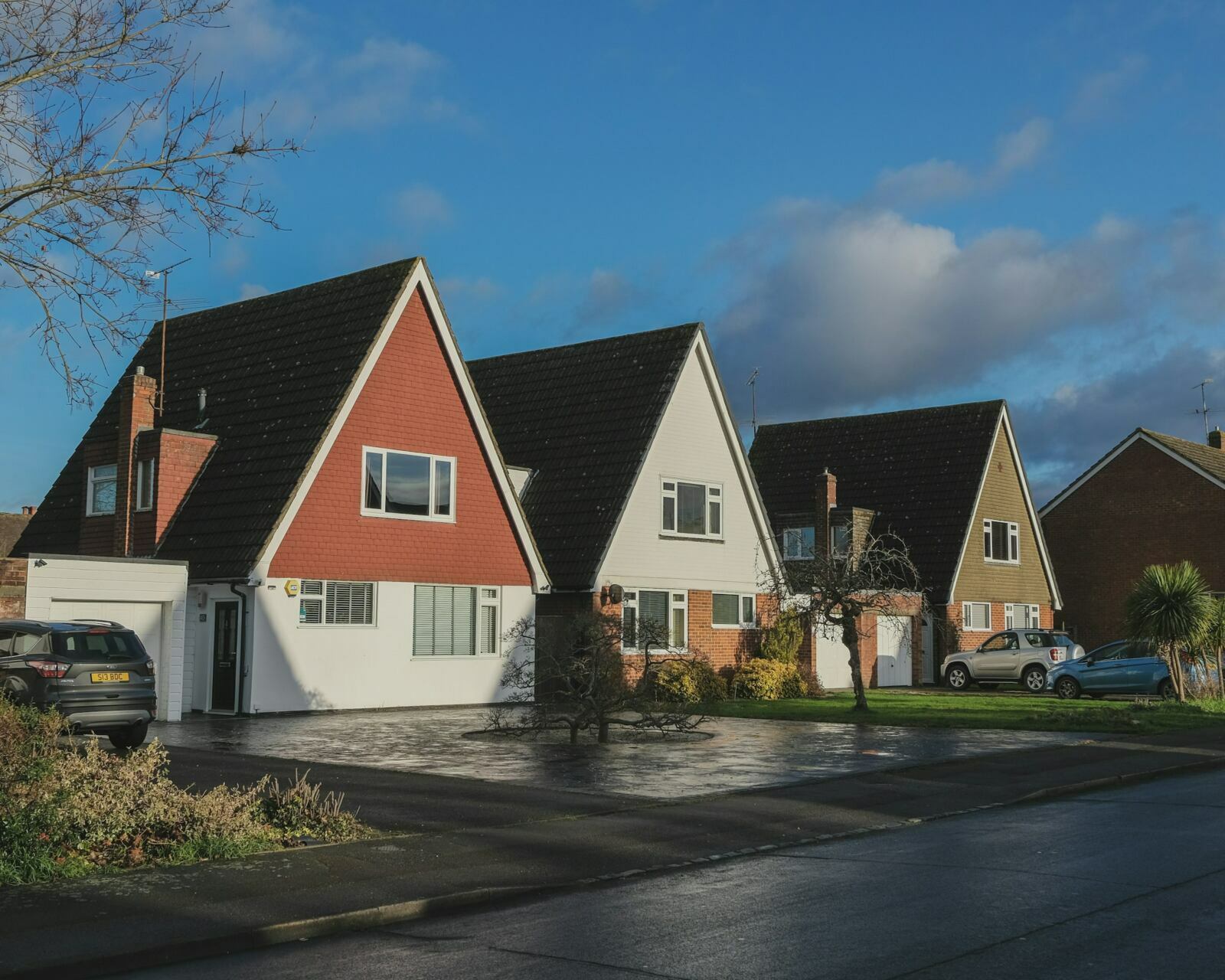
Congress passed the G.I. Bill in 1944, giving veterans access to low-interest home loans with no down payment required. Builders like William Levitt saw the need and ran with it — creating entirely new communities that could house thousands of families at prices working-class people could actually afford. The American suburb was essentially born from the aftermath of war.
Not everything was equitable, though. Redlining and discriminatory lending practices locked many Black veterans and families out of those same opportunities, a painful chapter that still echoes in wealth gaps today. Even so, homeownership rates climbed from around 44% in 1940 to over 60% by 1960. War planted the seed, and American ingenuity turned it into an orchard.
The Korean and Vietnam Wars: Inflation, Interest Rates, and the Cost of Home
The Korean War kept defense spending elevated and contributed to inflationary pressure across the economy during the early 1950s. Interest rates remained fairly manageable through that period, which kept home buying accessible as the postwar boom rolled on.
By the time the Vietnam War escalated through the late 1960s, the story changed considerably. Heavy military spending without offsetting tax increases — President Johnson's "guns and butter" approach — helped stoke the inflation that would define the 1970s. By the time the war wound down, the country was caught in an inflationary spiral that sent mortgage rates to jaw-dropping heights.
Rates topped 18% in the early 1980s as the Federal Reserve worked aggressively to wring inflation out of the economy. That made buying a home brutally expensive for a generation of would-be buyers. On the flip side, those who had locked in properties before the rate spike saw their real estate values hold strong as inflation pushed prices higher. Timing, as always, was everything.
The Gulf War and the 1990s: A Wobble, Then a Boom
When Iraq invaded Kuwait in August 1990, oil prices spiked and consumer confidence took a hit. The U.S. had already been sliding toward recession, and Gulf War uncertainty accelerated the jitters. Housing sales softened, new construction slowed, and buyers sat on the fence waiting to see how things played out.
The conflict was brief, though, and once the dust cleared, the 1990s turned into a remarkable decade for real estate. Falling interest rates, strong employment growth, and rising consumer confidence pushed home values steadily upward for years. The dip caused by Gulf War uncertainty ended up being a short chapter in a much longer bull market story.
That pattern — short-term hesitation followed by a healthy rebound — has repeated itself consistently whenever international conflicts are contained and resolved without spiraling into prolonged global disruption. The Fed also strarted to take a much stronger stance on managing short-term interest rates and inflation.
9/11 and Its Aftermath: Fear, Migration, and the Safety Premium
While the September 11 attacks were an act of terrorism rather than a conventional international conflict, the military engagements that followed in Afghanistan and Iraq had lasting effects on the housing market and on where Americans chose to live.
In the immediate aftermath of 9/11, real estate sales briefly froze in major cities — particularly New York. Some analysts predicted a mass exodus from dense urban cores. There was movement: suburban markets saw a pickup as some buyers looked for distance from high-profile targets.
The Federal Reserve responded by slashing interest rates aggressively. Those cuts, meant as a short-term stabilizer, ended up keeping mortgage rates historically low for years — pouring fuel on housing demand. Combined with loosened lending standards, the low-rate environment set up the conditions that eventually led to the housing bubble of the mid-2000s, which itself then burst in 2008. It's a complicated chain of cause and effect, but the wars in Afghanistan and Iraq contributed to the fiscal and monetary environment that shaped that whole era.
Military families also became a uniquely steady segment of the housing market during those years — buying and selling homes repeatedly as deployment orders moved them around the country, with VA loan programs serving them well throughout.
Ukraine, Russia, and the Supply Chain Squeeze of the 2020s
Russia's invasion of Ukraine in February 2022 hit global energy and commodity markets at a moment when the U.S. housing market was already running extremely hot. The effects on real estate showed up fast.
Construction materials were already constrained from pandemic-era disruptions. The war worsened energy costs, driving up the price of manufacturing and shipping just about everything that goes into building a house. Construction timelines stretched longer. New home costs climbed further. And the broader inflation surge that the conflict helped fuel gave the Federal Reserve justification to begin one of the fastest interest rate hiking cycles in modern history.
Mortgage rates went from around 3% at the start of 2022 to above 7% by late in the year — a move that priced millions of potential buyers out of the market almost overnight. Homeowners with sub-4% mortgages refused to sell and give up their rate, which froze inventory in a way the market hadn't seen since the early 1980s.
At the same time, global instability drove foreign investment into U.S. real estate as investors sought a stable store of value. Sun Belt and Southeast markets with strong fundamentals and relatively affordable prices held up well even as some coastal markets softened. Conflict abroad, somewhat paradoxically, reinforced confidence in American real estate as a safe harbor.
A Word From Mike Oddo, CEO of HouseJet
"History keeps proving the same thing — when something terrible happens in the world, the human spirit finds a way to turn it into fuel for something better. That's not just optimism. It's what the data shows every time we look back at these chapters. Communities rebuild smarter. Buyers find opportunities that weren't there before. Markets correct and then grow stronger. The real estate industry has come through every single one of these moments, and it's always landed on its feet.
To everyone affected by conflict around the world right now — our hearts are with you. We genuinely hope for a swift resolution, for the safety of families on all sides, and for a return to stability for the communities caught in the middle. Here at HouseJet, we believe that safe homes and stable neighborhoods are at the heart of human dignity, and we hold that belief for people everywhere."
— Mike Oddo, CEO, HouseJet
What the Patterns Tell Us
Looking across all of these historical moments, a few things stand out consistently. International conflicts almost always create short-term uncertainty — buyers hesitate, sellers pause, lenders tighten. But when the conflict doesn't escalate into a prolonged global catastrophe, those hesitation periods tend to be short-lived.
The Federal Reserve's response often matters more to housing than the conflict itself. Whether it's cutting rates to stimulate a rattled economy (as after 9/11) or raising them to fight conflict-fueled inflation (as in 2022), central bank policy is the lever that most directly moves mortgage rates and buyer purchasing power.
And real estate, through all of it, has proven to be one of the most durable assets available to American families. People will always need shelter. That fundamental demand doesn't disappear during hard times. It bends, but it doesn't break.
HouseJet's Recommendation: Here's Where to Track the Market
When international events start making headlines, the HouseJet team recommends keeping a close eye on these resources:
Freddie Mac Primary Mortgage Market Survey (freddiemac.com) — Published every Thursday, this is the go-to weekly snapshot of average 30-year and 15-year fixed mortgage rates. When global tensions spike, this number can move fast.
FRED Economic Data (fred.stlouisfed.org) — Run by the St. Louis Federal Reserve, FRED gives you real-time and historical data on mortgage rates, home prices, housing starts, and hundreds of other economic indicators. It's free and genuinely one of the best tools available for tracking where the market is and where it might be heading.
National Association of Realtors (nar.realtor) — Monthly existing home sales data, median price reports, and affordability indexes all live here. NAR data tells you what's actually happening on the ground across the country.
10-Year Treasury Yield — Mortgage rates track the 10-year Treasury, not the Fed Funds Rate. You can find it at finance.yahoo.com or wsj.com/market-data. When you see this yield move, mortgage rates are usually not far behind.
Staying informed isn't about trying to perfectly time every decision. It's about not being caught off guard — and being ready to move when the market hands you a window.
Conflict is unpredictable. The resilience of American real estate, it turns out, is not. Every generation has faced its version of global instability, and every generation of homeowners, buyers, and builders has found a way through it. Chances are pretty good the next generation will too.