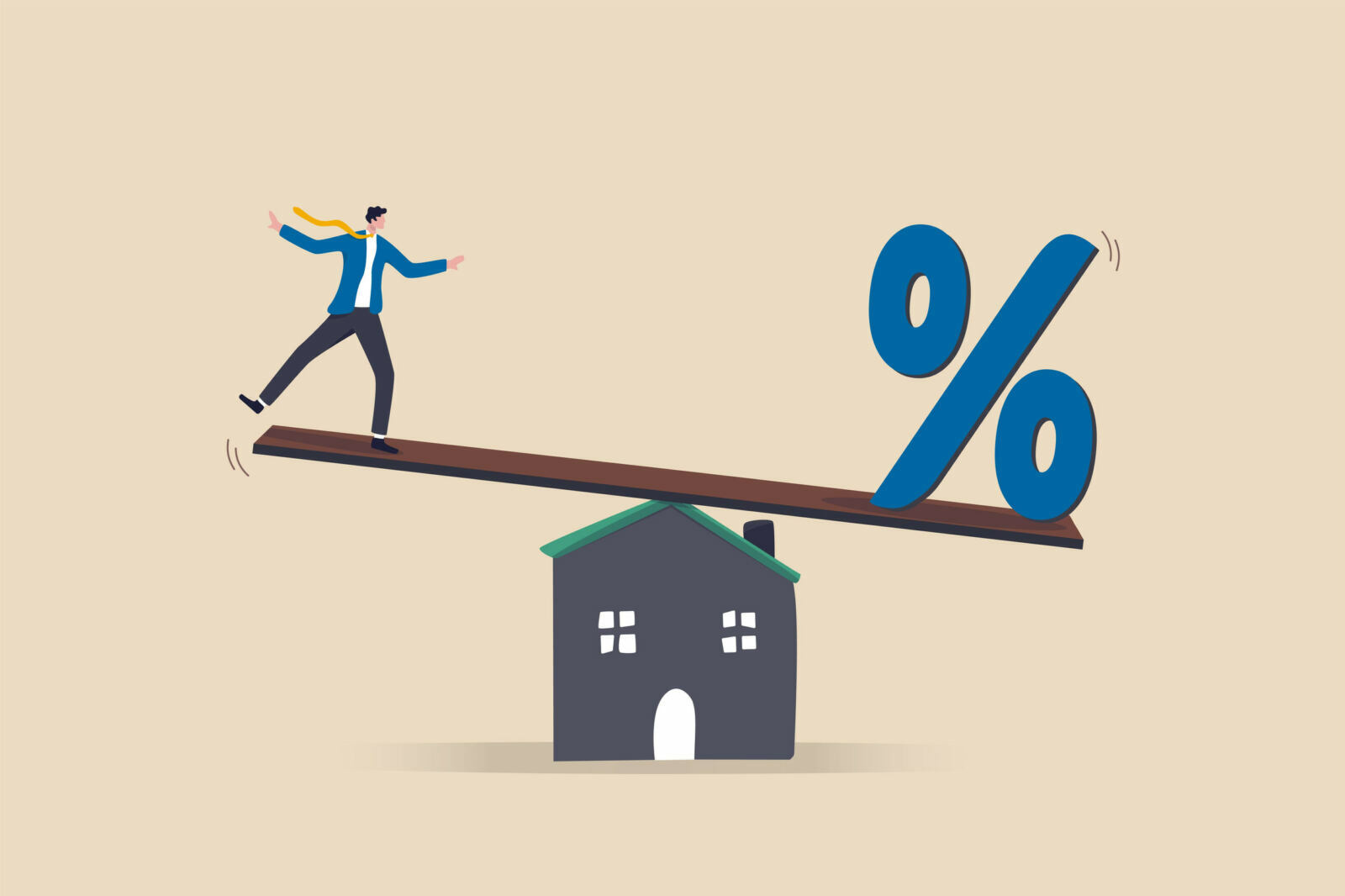

Let me describe a feeling that maybe twenty million Americans are walking around with right now.
You bought or refinanced your home sometime between 2020 and early 2022. You did everything right. You locked in a rate at 2.75%, 3.125%, maybe 3.5% if you were “unlucky.” You watched friends marvel at your monthly payment. For a while, you felt like a financial genius.
Then life kept moving. The kids grew up, or you had another one. The job changed. The commute changed. The neighborhood changed. The needs changed. And now you’re standing in a house that doesn’t quite fit anymore — but the second you think about moving, your stomach drops. Because the same rate that felt like a victory two years ago has now become the bars on your cage.
If that’s you, I want to say two things before we go any further.
First, you’re not crazy. The math on giving up a 3% mortgage to take on a 6.5% one really is brutal. That instinct in your gut telling you “this doesn’t make sense” — it’s correct, in most simple analyses. You’re not being stubborn or short-sighted. You’re being reasonable.
Second, you’re not as stuck as you think. There are real strategies people are using right now to get out from under the lock-in effect without setting their finances on fire. They’re not for everyone, but at least one of them probably applies to you. Let’s walk through them.
First, Let’s Validate How Big This Problem Actually Is
You’re not imagining it. Roughly two-thirds of outstanding mortgages in the U.S. are at rates under 4%. About a quarter are under 3%. That’s tens of millions of households sitting on rates they will likely never see again in their lifetimes.
Economists call this the “lock-in effect,” and it’s the single biggest reason housing inventory has stayed tight even as the market has cooled. People aren’t selling because they can’t justify the math. Which means homes don’t come on the market. Which means buyers compete harder for what’s available. Which means prices stay supported even when demand softens.
So when you feel like the entire housing market is conspiring to keep you in your current home — you’re not wrong. It kind of is. But that doesn’t mean there’s no path forward. It just means the path isn’t the obvious one.
Strategy One: Don’t Sell. Rent It Out.
This is the one most people overlook entirely.
Here’s the basic idea. Instead of selling your current home and giving up that beautiful 3% mortgage, you keep it and rent it out. You either rent the new place you move into, or you buy a smaller (or different-area) home with whatever you have available — savings, a HELOC against your current home’s equity, or a smaller mortgage at today’s rates.
The math often works surprisingly well, because you’re capturing two things at once. You keep the low-rate mortgage and let a tenant pay it down for you — and in many markets, rent more than covers your principal, interest, taxes, and insurance, meaning you’re cash-flow positive every single month. On top of that, you now get appreciation on two properties instead of one. Twenty years from now, instead of having sold your house and pocketed the equity once, you own two assets that have both grown in value.
There are real considerations of course. You become a landlord, which has its own headaches — tenant issues, maintenance calls, vacancy risk. You may need professional property management (typically 8–10% of rent), which eats into cash flow. There are tax implications. And the home stops being your primary residence eventually, which affects the capital gains exclusion if you sell later.
But for a lot of people I talk to — especially those who don’t need the equity from this house to fund the next purchase — this is the move. They walk out with a 3% mortgage now generating monthly income, plus the freedom to make their next move without giving up the gold they’ve already locked in.
Strategy Two: The Assumable Mortgage Goldmine
This one is criminally underused.
If you have an FHA, VA, or USDA loan — and a surprising number of homeowners do without realizing it — your mortgage is assumable. That means a qualified buyer can literally take over your loan, including your low rate.
Think about what that means in today’s market. You’re selling a home, and you can offer a buyer the chance to assume your 2.875% loan when everyone else in the market is offering homes financed at 6.5%. That’s not a small advantage. That’s a wildly attractive selling feature.
Buyers will pay more for assumable homes because they’re effectively buying a low-rate mortgage along with the house. In some markets, sellers with assumable loans are commanding 5–8% premiums over comparable non-assumable listings. That premium often more than covers the cost of buying your next home at today’s rates.
The catch: assumption requires lender approval, the buyer needs to qualify under that loan program’s rules, and they need cash (or secondary financing) to cover the gap between the loan balance and your asking price. The process is also slower than a traditional sale — figure 60 to 90 days versus 30 to 45.
But if you have an assumable loan, you have leverage that other sellers don’t. Don’t sleep on it. Pull out your loan paperwork and check what type of loan you actually have. A lot of people don’t even know.
Strategy Three: Run the Move-Up Math in Specific Markets
Here’s something that’s not getting enough attention. While prices have stayed strong overall, certain markets and certain price segments have softened meaningfully. And in those markets, the move-up math can actually pencil out — even with rates where they are.
Here’s how. You sell your $450,000 home and pay off your $250,000 mortgage. You walk away with roughly $180,000 after closing costs. You buy a $550,000 home (bigger, better location, whatever the upgrade is) and put $150,000 down, financing $400,000 at today’s rates.
Your monthly payment goes up. No way around that. But — and this is the part most people miss — if the new home is in a market segment that’s softened more than your current one, you might be buying it at a $20,000 to $50,000 discount compared to what it would have cost two years ago. That’s an instant gain you only capture because you moved when most others wouldn’t.
The point is this: don’t let your current rate keep you from running the actual numbers on your actual next move. Sometimes the move-up makes sense even with a higher rate. Sometimes it doesn’t. But you’ll never know until you stop assuming and start calculating.
Mike Oddo, CEO of HouseJet, said it well when we were talking about exactly this issue recently: “The biggest myth in real estate right now is that nobody can move because of rates. The truth is, most people can move — they just need a strategy that fits their specific situation instead of a one-size-fits-all approach. Whether that’s renting out the current home, leveraging an assumable loan, or running honest numbers on a specific upgrade, the right strategy makes moving possible even in a high-rate environment. The wrong strategy makes it impossible at any rate.”
That last line stuck with me, because it cuts both ways. The strategy is everything.
A Few Other Options Worth Knowing About
Just so you have the full picture, there are a few more tools people are using right now. You can negotiate a rate buydown from the seller — if you’re buying from a builder or a longer-sitting listing, you can often work out a 2-1 buydown that effectively gives you two percentage points off your rate for year one, one point off year two, and your full rate from year three on. That extra runway makes the early years much more manageable. You can use a HELOC as a bridge — tapping your existing home’s equity through a HELOC can fund the down payment on your next place without selling, and combined with renting out the current home, that’s a powerful combination. And in certain cases, a cash-out refinance to consolidate high-interest debt — yes, even at today’s rates — can net you better cash flow than holding the low rate, especially if you plan to rent the home out afterward.
Will any of these be right for everyone? Of course not. But the days of “I have a 3% rate, so I’m just stuck” are over. There are options.
The Most Important Thing as HouseJet Sees It
If you take one thing from this article, take this: your situation deserves an actual analysis, not a gut reaction.
I’ve talked to homeowners who held off moving for three years assuming the math couldn’t work — only to find, when they finally ran the real numbers, that one of these strategies fit them perfectly. They’d been miserable in homes that didn’t fit anymore, all because they assumed a complicated situation was impossible.
It’s not impossible. It’s just specific.
HouseJet is here to help you understand what your specific options actually look like — to take the headlines off your back and put real numbers in front of you, so you can make a decision based on your life, not the lock-in effect.
The market shifted. The strategies shifted with it. Yours can too.