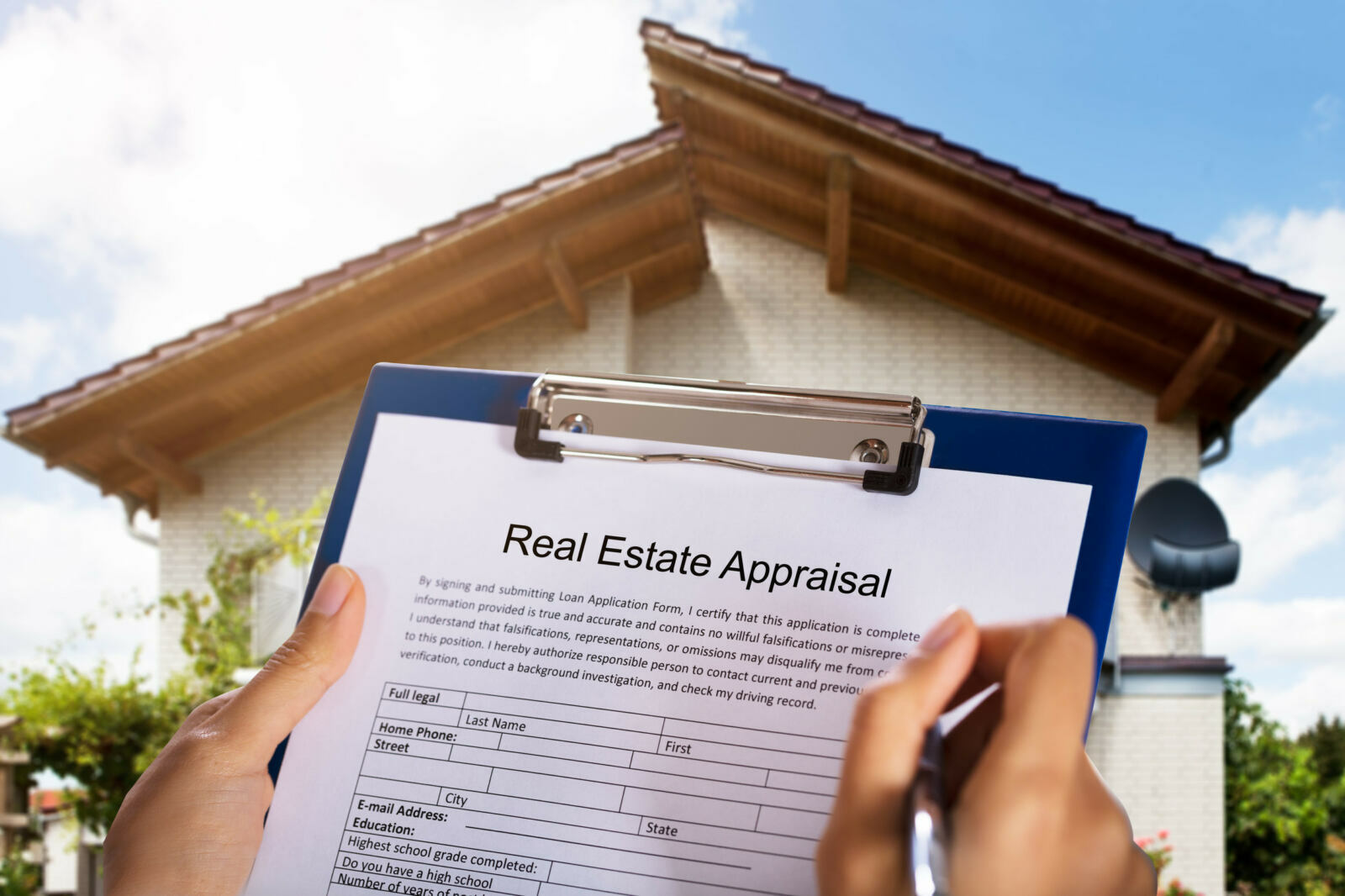

So you’ve been holding your breath for two weeks. The offer was accepted, the inspection went mostly okay, the financing is moving along — and then the call comes in. “We got the appraisal back. It came in low.”
Cue the pit in your stomach.
If you’re the buyer, your mind immediately spirals. Am I overpaying? Do I lose my earnest money? Do I have to come up with thousands in cash I don’t have? Is this whole deal dead? If you’re the seller, you’re probably equally panicked. Do I have to drop my price? Will the buyer walk?
Take a breath. A low appraisal feels catastrophic in the moment, but it kills far fewer deals than most people think. The vast majority of these situations get resolved — usually in a way both sides can live with. You just need to understand what you’re actually looking at and what your real options are. Let me walk you through it like a friend who’s seen this play out a hundred times.
First: What a Low Appraisal Actually Means
An appraisal is an independent valuation of the home, ordered by your lender to make sure they’re not loaning more money against the property than it’s actually worth. The appraiser pulls recent comparable sales, makes adjustments for size, condition, features, and lot, and arrives at a market value. When that value comes in below your contract purchase price, the lender will only finance based on the appraised number, not the contract number. That creates what’s called the “appraisal gap.”
A concrete example. You and the seller agreed on $450,000. The appraisal comes in at $430,000. That’s a $20,000 gap. The lender will lend you a percentage of $430,000 — not $450,000. So unless something changes, somebody has to come up with that $20,000, the price has to come down, or the deal has to be renegotiated. That’s the whole problem. Now let’s talk solutions.
Option One: The Buyer Covers the Gap
If you’re the buyer and you really want this home, you can cover the gap in cash at closing. In our example, you’d bring an extra $20,000 on top of your planned down payment and closing costs. When does this make sense? When the home is genuinely worth more to you than the appraisal suggests — appraisers are working off recent comps in a specific window, and if the market is rising fast or you’ve competed in multiple bidding wars to finally win this one, the price may legitimately be right even if the paper couldn’t fully justify it.
When does this not make sense? When the gap would seriously strain your finances, when it’s more than 5% or so of the price, or when you have no real reason to believe the home is worth what you agreed to pay. Don’t drain your emergency fund to chase a single house. There are other houses.
Option Two: The Seller Reduces the Price
This is the cleanest option from the buyer’s perspective. The seller agrees to lower the contract price to the appraised value, and the deal closes on the new number. Sellers, here’s why this is sometimes the right move even though it stings: if you re-list, the next buyer’s lender will almost certainly use a similar set of comps and arrive at a similar number. You haven’t really “saved” anything by losing this buyer — you’ve just delayed getting to the same number with someone else, while paying another month or two of carrying costs.
That said, you don’t have to roll over. If you genuinely believe the appraisal was off, or you have a backup offer at the original price, you have leverage. Just use it deliberately, not emotionally.
Option Three: Meet in the Middle
This is what actually happens most of the time. The buyer covers some of the gap. The seller comes down on price by the rest. Everyone gives a little, the deal closes, life moves on.
In our $20,000 example, that might look like the seller dropping the price by $10,000 and the buyer covering the other $10,000 in cash. Or any split that works for both sides — sometimes the buyer also asks for a small repair credit, or the seller throws in a home warranty, or they restructure other terms to make everyone feel okay about how they got there.
This is where having a calm, experienced negotiator in your corner matters more than almost anywhere else in the transaction. Most appraisal gaps get bridged, not battled.
Option Four: Challenge the Appraisal
You don’t have to accept the appraised value at face value. Appraisers make mistakes. Sometimes they use comps that don’t really compare. Sometimes they miss recent sales. Sometimes they miscount square footage or overlook a finished basement entirely.
If the appraisal looks wrong, you can request what’s called a Reconsideration of Value (ROV) through the lender. You’ll typically need to provide three to five better comparable sales that the appraiser missed or should have weighted differently. The lender sends the new information back to the appraiser, who reviews it and either adjusts the value or doesn’t.
ROVs work maybe 20 to 25% of the time, in my experience. Not great odds, but not nothing — and when they work, they often work decisively, sometimes pulling the value up by tens of thousands of dollars.
When to challenge: when you have clearly stronger comps, when the appraiser used homes in inferior neighborhoods or much smaller sizes, when there are obvious factual errors. When to skip it: when the comps used were reasonable and the gap is small. You’re not going to argue your way to a $50,000 swing on a fundamentally fair appraisal. A second option in some cases is to order an entirely new appraisal with a different appraiser, usually for $500 to $700 out of pocket — not always allowed depending on the loan program, but worth knowing about.
Option Five: Walk Away
If the deal genuinely doesn’t make sense at the appraised value, and neither side will move enough to bridge it — walk. Especially if you, the buyer, included an appraisal contingency in your offer (which most non-cash buyers should), you have a clean way out and you keep your earnest money intact.
This is the right move when the gap is large, the home isn’t unique, the market has other comparable options, and the seller refuses to engage. There are always other houses. Don’t fall so in love with one that you make a bad financial decision just to keep it.
Mike Oddo, CEO of HouseJet, said something I keep coming back to when we were talking through a recent deal that had an appraisal scare: “An appraisal gap doesn’t have to kill a deal — it almost never should. When both parties understand what’s actually happening, and they’re willing to come to the table with real solutions instead of just digging in, almost every gap can be bridged. The deals that die at the appraisal stage aren’t the ones with low appraisals. They’re the ones where one side decides not to communicate.”
That tracks with everything I’ve seen. The deals that fall apart at the appraisal stage usually fall apart because someone treated it as a personal insult instead of a math problem to solve.
A Few Quick Notes for Sellers
Don’t panic the second your agent calls with bad appraisal news. Your buyer is almost certainly still interested — they wouldn’t have negotiated this far otherwise. Stay at the table and figure out what split works. Going back on the market means another month of payments, showings, and uncertainty, with no guarantee the next buyer’s appraisal comes in any higher. That said, if you have a strong reason to believe the appraisal was wrong — a competitive offer history, multiple over-ask offers in the same neighborhood, genuinely better comps the appraiser missed — push for the ROV. You’re allowed to defend your number.
A Few Quick Notes for Buyers
The most important thing is that you included an appraisal contingency in your offer. If you waived it to compete in a hot bidding war, you may not have an easy out, and you may be on the hook for the full gap or risk your earnest money. That’s a real consequence of a waiver, and one a lot of buyers don’t fully appreciate when they’re signing. Going forward, think hard before waiving appraisal contingencies, even in competitive situations. If you do have the contingency, you have leverage. Use it calmly. Don’t threaten to walk — just ask the seller to meet you somewhere reasonable. Most do.
HouseJet's Big Picture
A low appraisal feels like the deal exploded. Usually, it’s just the moment where you find out what kind of negotiation you’re really in. The buyers and sellers who get through these moments well share a few traits: they stay calm, they understand their options, they communicate, and they treat the gap as a problem to solve rather than a battle to win.
HouseJet is here to help you understand exactly what your options look like when these moments hit — so you can make informed decisions instead of panicked ones, and so a single phone call about an appraisal doesn’t have to be the moment a deal dies.
The appraisal came in low. Now what? Now you take a breath, look at the numbers, and figure out the path forward. Most of the time, there is one.