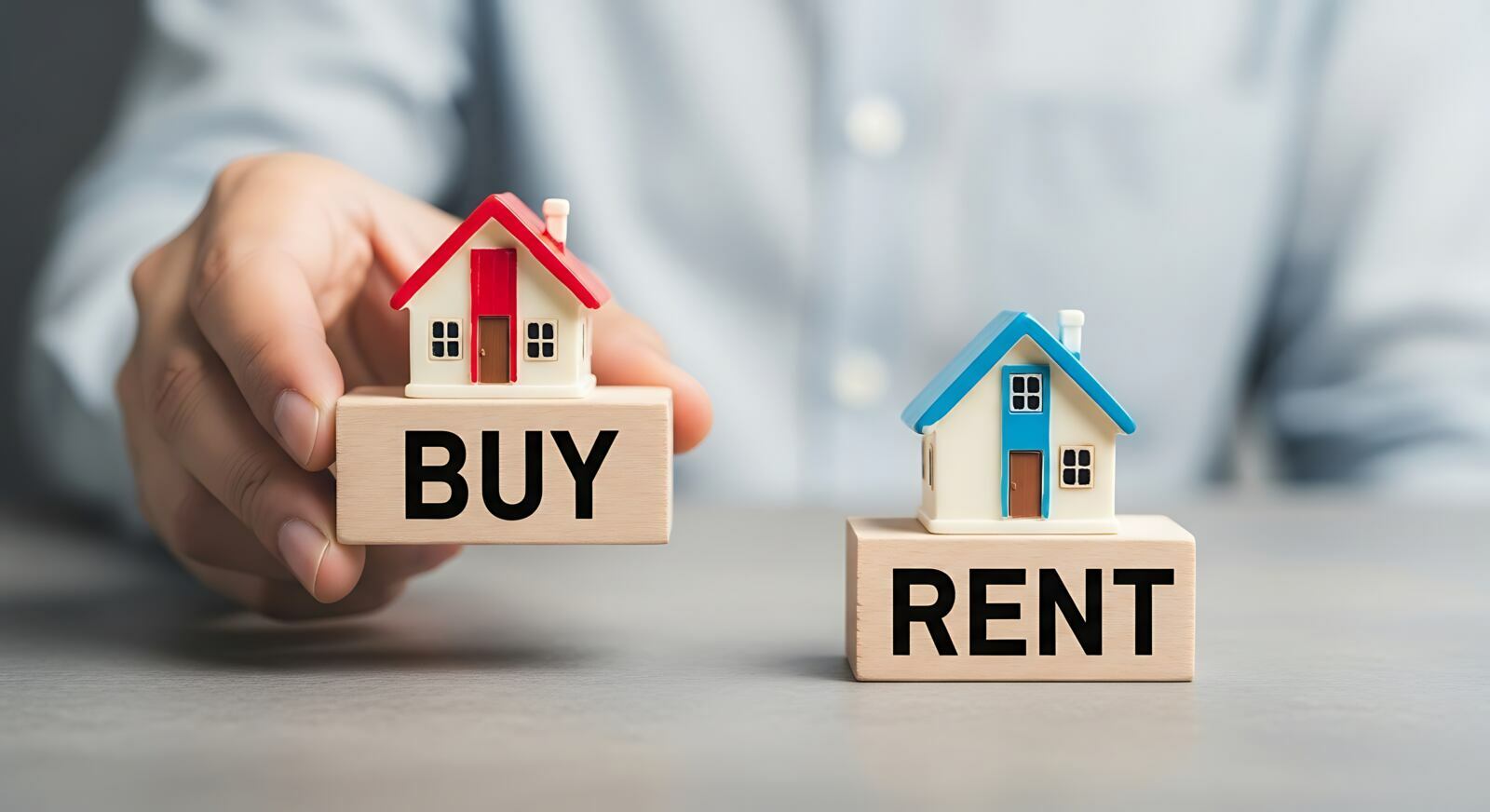

If you've been watching your rent climb year after year, you've probably asked yourself this question more than once. The short answer? Yes, homeownership is often less expensive than renting over time—and in more ways than you might realize.
Let's break down exactly how owning a home can save you money compared to throwing rent checks at a landlord every month.
Your Monthly Payment Stays Put (While Rent Keeps Rising)
Here's the biggest difference between renting and owning: predictability.
When you lock in a fixed-rate mortgage, your principal and interest payment stays the same for the entire life of your loan. That means if you buy a home today with a monthly payment of $1,800, you'll still be paying $1,800 fifteen years from now. Meanwhile, your neighbor who's renting will probably see their rent increase every single year.
Rent doesn't come with a price ceiling. Landlords can raise it whenever your lease is up, and in hot markets, those increases can be substantial. Over a 30-year period, renters often end up paying significantly more than homeowners simply because of this steady upward creep in housing costs.
You're Building Equity Instead of Building Your Landlord's Wealth
Every mortgage payment you make does double duty. Part of it covers interest, sure, but a portion goes toward paying down your loan principal. That's equity—real value that belongs to you.
Renters don't get that benefit. Every rent check is gone forever, with nothing to show for it except another month of occupancy. Homeowners, on the other hand, are gradually increasing their net worth with each payment. After five years of renting, you have nothing. After five years of homeownership, you might have $40,000 or more in equity, depending on your market.
That equity becomes a financial asset you can borrow against, sell, or pass down to your family.
Tax Benefits That Renters Miss Out On
Homeownership comes with legitimate tax advantages that can save you thousands of dollars every year.
Mortgage interest is tax-deductible on loans up to $750,000, which means you can reduce your taxable income by the amount of interest you pay each year. Property taxes are also deductible up to $10,000 annually. These deductions can add up to serious savings, especially in the early years of your mortgage when interest makes up a larger portion of your payment.
Renters get zero tax breaks for their housing costs. Not a single deduction. That's money left on the table every April.
Home Values Appreciate (Most of the Time)
Real estate has historically been one of the most reliable long-term investments. While home values can fluctuate in the short term, they tend to increase over time. The median home price in the United States has grown consistently over the past several decades, which means homeowners benefit from appreciation.
When you rent, you're not invested in the property. If the home's value doubles over twenty years, your landlord reaps that reward—not you. But when you own your home, that appreciation belongs to you. When you eventually sell, you could walk away with a substantial profit that renters will never see.
No More Rent Hikes, No More Uncertainty
Renting means living with constant uncertainty. Will your landlord renew your lease? Will they sell the property? Will they jack up the rent so high that you're forced to move?
Homeownership gives you stability and control. You're not at the mercy of someone else's financial decisions or real estate strategy. You can paint the walls, renovate the kitchen, or install a fence without asking permission. And you'll never get a notice that your rent is going up by $200 a month.
That peace of mind has real value.
You Can Stop Paying Eventually
Here's something renters don't think about enough: mortgages end.
In 15 or 30 years, depending on your loan term, you'll make your final mortgage payment. After that, your housing costs drop to just property taxes, insurance, and maintenance. Renters, on the other hand, will be paying rent until they die or move into assisted living.
Imagine retiring without a mortgage payment. That's thousands of dollars a month that stays in your pocket—money you can use for travel, healthcare, or helping your kids. Renters don't get that finish line.
You're Protected Against Inflation
Inflation erodes the value of money over time, but it actually works in favor of homeowners.
Your mortgage payment is locked in at today's dollars, but as inflation drives up wages and prices, that fixed payment becomes easier to afford. In 20 years, a $2,000 mortgage payment might feel like pocket change compared to what renters are paying. Plus, your home's value will likely rise with inflation, giving you even more equity.
Renters, meanwhile, feel inflation's full weight as their rent climbs right along with it.
What the Experts Say
Mike Oddo, CEO of HouseJet, puts it bluntly: "You should do everything you can to own a home to protect your financial future. Renting might feel easier in the short term, but homeownership is one of the most powerful wealth-building tools available to everyday people. The sooner you get into the market, the sooner you start building equity and securing your family's financial stability."
How to Get Into Homeownership Sooner
If you're convinced that owning makes more financial sense than renting, the next question is: how do I make it happen?
HouseJet recommends exploring first-time buyer programs that offer lower down payment requirements and competitive interest rates. Many buyers don't realize they can purchase a home with as little as 3% down through conventional loans or even 0% down through VA or USDA loans.
You should also consider getting pre-approved for a mortgage before you start house hunting. Pre-approval shows sellers you're serious and helps you understand exactly how much home you can afford. Working with an experienced real estate agent can also open doors to off-market opportunities and help you find properties within your budget.
The bottom line? Homeownership isn't just about having a place to live—it's about building wealth, gaining stability, and protecting your financial future. And the sooner you start, the better off you'll be.