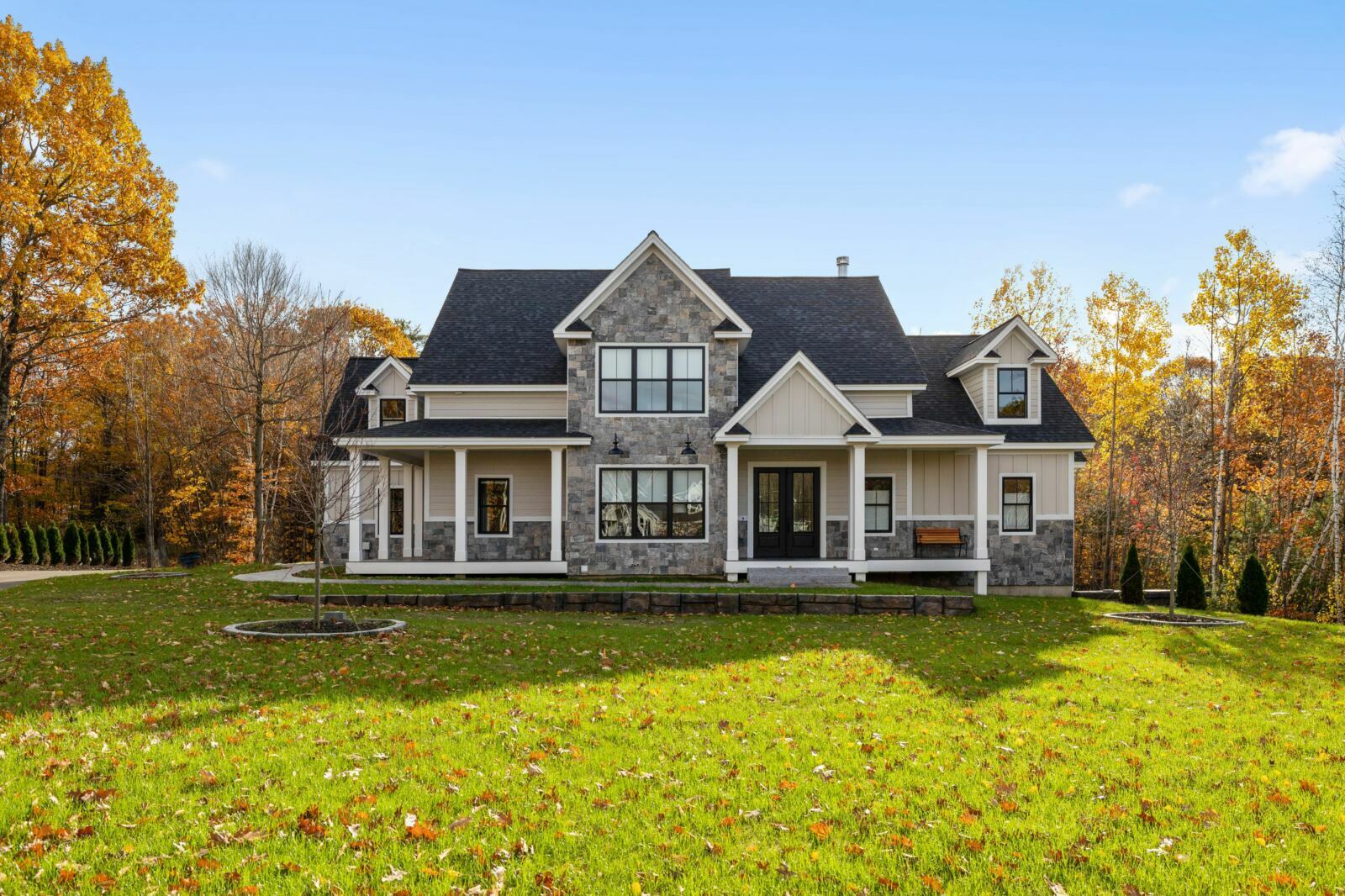

You know the feeling. You've been in your house long enough that you've noticed everything you'd change if you could. The kitchen layout that's never quite worked. The backyard that could be so much more. The bathroom that was dated when you moved in and hasn't gotten any younger. And somewhere in the background, a quiet question: is it time to move?
But then comes the other voice: you love the neighborhood. Your kids are settled. You've built something here. And the thought of packing up a life and starting over somewhere new — and paying all the costs that come with it — is enough to make renovating sound a lot more appealing.
This is one of the most common crossroads homeowners face, and there's no universal right answer. But there are clear frameworks for thinking through it — financially and emotionally — that can help you arrive at a decision you'll feel confident about. According to the National Association of Realtors (NAR), in 2025, 26% of real estate consumers moved because it was simply the right time.
Let's work through both sides of that.
When Staying and Renovating Is the Smarter Move
Renovating wins the argument in a few specific situations, and it's worth being honest about which ones actually apply to you.
You have a great location you can't replicate. This is the one homeowners most consistently undervalue. Location isn't just about the address — it's about the school district your kids are in, the commute you've optimized, the neighborhood where you actually know your neighbors, the proximity to family or community that took years to build. These things cannot be renovated into existence somewhere else. If you love where your house sits but not what the house is, renovating is almost always worth serious consideration.
The cost of moving is higher than you think. Real estate commissions, closing costs, moving expenses, and the immediate upgrade purchases that come with any new home add up fast — typically 8% to 10% of your home's value when you factor everything in. On a $500,000 home, that's $40,000 to $50,000 in friction costs before you've spent a dollar on the new place. If your renovation scope is smaller than that, you may be better off staying and improving what you have.
You have a mortgage rate worth protecting. If you locked in a rate below 4% in 2020 or 2021, moving means giving that up and stepping into today's mid-6% environment. On a $400,000 loan, the difference between 3.5% and 6.5% is over $700 per month. That's a number worth sitting with before you decide to trade it in. For many homeowners, this single factor tips the scale toward renovating rather than moving.
You have strong equity to fund the project. Homeowners who've built significant equity have a powerful tool: a home equity loan or HELOC can fund a renovation at interest rates well below what personal loans or credit cards would charge. If you have the equity and the project scope is defined, renovating with your own home's value is often a financially efficient way to get what you want.
The emotional connection is real and deep. This one doesn't get talked about enough because it feels less “serious” than the financial factors — but it's legitimate data. If you've raised your kids in this house, if your family has deep roots here, if the thought of leaving genuinely makes you sad rather than relieved, that's worth something. Renovation is often the more honest choice for homeowners who know in their gut that what they want is this home, just improved.
When Selling Makes More Sense
Renovating isn't always the answer, and talking yourself into an expensive project to avoid the disruption of moving is a mistake many homeowners make. Here's when selling is probably the cleaner path.
The home no longer fits your life — and can't. If you need more bedrooms and there's nowhere to expand, if the lot size can't accommodate the space you need, if the layout is fundamentally incompatible with how your family actually lives — renovation can't solve a structural mismatch. You can refresh a kitchen, but you can't make a two-bedroom house into a four-bedroom one without costs that rarely make financial sense. If the bones of the house don't fit your life, no amount of renovation will change that.
Renovation costs exceed what the market will return. Some renovations add more value than they cost. Many don't. If you're considering $150,000 in improvements in a neighborhood where homes top out at $400,000, you're likely to be over-improving for the market — meaning you'll spend more than buyers will ever pay you back for. Understanding your local price ceiling before committing to a major renovation is essential, and it requires honest, current market data.
You're ready for a different chapter. Sometimes the itch to move isn't really about the house at all — it's about a season of life that has passed. The kids are grown and the big house feels empty. You've always wanted to be closer to the water, or the mountains, or your aging parents. You're tired of the yard. If the honest answer is that what you want is a different life in a different place, no renovation will scratch that itch.
Market conditions are genuinely in your favor. In a seller's market — or in a neighborhood where demand is strong and inventory is low — you have real leverage. Selling well and capturing that equity gives you a meaningful financial runway for your next chapter. If your market is hot and you have flexibility on where you go next, that combination can make selling the more strategic move.
Which Renovations Actually Pay Off (And Which Ones Don't)
If you're leaning toward renovating — whether to enjoy the home or to prep it for sale — it's worth knowing which projects reliably recoup their costs and which ones are really just lifestyle purchases that buyers won't pay you back for.
Higher ROI projects:
Minor kitchen refresh: New hardware, painted cabinets, updated fixtures, a new faucet, and fresh countertops. Typically recoups 70% to 85% of cost and dramatically improves buyer perception. Much better return than a full gut renovation.
Bathroom update: New vanity, toilet, tiling, and fixtures. A refreshed bathroom signals a well-cared-for home and tends to return 60% to 70% at resale.
Curb appeal and landscaping: Fresh mulch, trimmed landscaping, a painted front door, and exterior power washing cost relatively little and create strong first impressions that directly influence offers.
Garage door replacement: Consistently one of the highest ROI projects in national surveys — often returning over 90% of cost because it's so visible and so often neglected.
Fresh paint and flooring: Neutral paint throughout and updated or refinished floors are among the cheapest and most effective investments for resale. Buyers notice tired paint and worn floors immediately, and they negotiate accordingly.
Lower ROI projects (lifestyle upgrades more than investment plays):
Full kitchen gut renovation: Major kitchen overhauls typically return 50% to 60% of cost at resale. If you're doing it to enjoy the space for years, that math may still make sense — but don't expect to get it back at closing.
Swimming pool: In most markets, a pool adds some value but almost never recoups its installation cost. It also adds to insurance, maintenance, and liability — all of which buyers factor in.
Sunroom addition: Tends to return 50% or less. Buyers aren't usually willing to pay for square footage that doesn't feel like true living space.
High-end finish upgrades: Premium appliances, custom built-ins, and luxury fixtures may make you happier in the home, but buyers rarely pay the full premium above what the neighborhood supports. Know your local price ceiling before you over-invest.
The Question Underneath the Question
Here's a clarifying question worth sitting with: if you renovated everything on your wish list tomorrow and the house was exactly how you've always imagined it — would you want to stay? Or would you still be looking out the window wondering about somewhere else?
If the honest answer is that you'd want to stay, renovate. If the honest answer is that you'd still feel the itch, don't spend the money — put it toward your next move instead. No renovation has ever solved a longing to be somewhere different.
The financial side of this decision deserves the same honesty. What would your home actually sell for in the current market? What would a renovation realistically cost given today's labor and material prices? What would your monthly payment look like if you bought something comparable — or something better — at today's rates?
These aren't questions most homeowners can answer accurately on their own, and guessing is what leads to expensive regrets in both directions.
Mike Oddo, CEO of HouseJet, sees this situation constantly. "This is genuinely one of the most important financial decisions a homeowner can make, and it deserves real data — not guesswork. A HouseJet Local Expert Agent can walk a homeowner through exactly what their home would sell for today, what comparable homes are going for in the areas they're considering, and whether the renovation they're contemplating is likely to pay off in their specific market. That conversation alone usually gives people the clarity they've been missing. Most of the time, the answer becomes pretty obvious once you're looking at the actual numbers."
HouseJet: There's No Wrong Answer — Only an Uninformed One
Some homeowners will read through all of this and know immediately what they're going to do. Others will feel the tension of a genuine toss-up, where both options have real merit and real costs.
That's okay. This is a complex decision with financial, emotional, and practical dimensions that are worth taking seriously. What isn't okay is making it based on incomplete information — estimating what your home is worth, guessing at renovation costs, or assuming the market is something it isn't.
Get the real numbers first. Know what your home is worth today. Know what it would cost to make it what you want. Know what moving would actually cost and what it would get you. Once you have all of that in front of you, this decision tends to get a lot clearer — and whatever you choose, you'll make it with confidence instead of doubt.